Products Demo Docs Blog Research About Contact Sign in Sign up

A tamper-evident receipt on every AI inference, verified by a party that did not run it.

Cryptographic proof of what your AI actually did.

Cyberian Systems issues cryptographic receipts proving which AI model ran on which input. The receipt is signed by an independent verifier that did not run the job, so the evidence does not come from the operator. Live today with bring-your-own-model in ONNX format. Confidential computing hides your data from the operator and attests the loaded model and code; Cyberian adds the one check that still applies when the operator has physical access to the machine: an independent re-check of the result.

  • Live in production
  • Python SDK on PyPI
  • Patents pending
  • Montreal, Canada
Cyberian receiptverifier signed
receipt_id
rcpt_9f2a...c71d
issued_at
2026-10-19T14:22:08Z
assurance_level
committed computation traces
model_digest
sha256:4b1e...a9f0
input_digest
sha256:e7c3...11b8
output_digest
sha256:0d54...8aa2
batch_root
9c84...f3e1
executor_id
node_47
attestor_signature
3045...be90
  1. Output digest matches the output heldpassed
  2. Job is included in the committed batchpassed
  3. Verifier signature is authenticpassed
Illustrative receipt. Field names follow the engineering notes, where the verifier is called the attestor; values are examples. Read what each field proves.

What a receipt answers

Three situations where the operator's log is not enough.

Payments

A payment was declined at 2 a.m. Who decided, and on what?

A risk model scores a transaction and the payment is refused. The cardholder disputes it, the ombudsman clock starts, and the first question is which model version produced that score, on which input. The provider's log is the provider's word about itself. A receipt binds the exact model, the exact input and the exact output, and the compliance officer checks it without the vendor on the call.

Medical records

Six months later, an appeal asks which records the model saw.

A payer's review workflow uses a model to retrieve and classify the clinical documents attached to a request. When the denial is appealed, the question is whether the model saw the complete record, unaltered, and which version of the model it was. A receipt carries a digest of the input as submitted, so an altered or truncated record fails the check, and the model digest, so a silent model change is visible. The reviewer verifies it offline; the data never has to leave the file.

Engineering certification

The reviewer cannot rerun your model. They can rerun your receipt.

A machine-learning component goes into a system that has to be certified. The designated reviewer can rerun a test suite or a coverage report; they cannot rerun a trained model, and a supplier's attestation is not evidence they can re-derive. A receipt per verified inference, issued by a verifier that did not run the model and checkable offline, is a candidate means of compliance the reviewer can re-derive themselves.

Also in regulated work: insurance underwriting and claims, plaintiff legal, finance research, and Canadian financial institutions preparing for OSFI Guideline E-23, which takes effect on 1 May 2027. Read the industry posts.

How a receipt is made

  1. Submit

    Send the job through the Python SDK, or send the inputs and the digest of outputs you already produced.

  2. Verify independently

    A verifier that did not run the job re-executes an unpredictable sample on its own infrastructure and compares the result: exactly where the execution path is bit-reproducible, within a stated tolerance where GPU floating point makes bit equality unrealistic.

  3. Receive the receipt

    A small signed record binding model digest, input digest, output digest, batch inclusion and assurance level, signed by the verifier, never by the executor. Three checks anyone can run offline.

The party that runs the model never produces the evidence that it ran correctly. It is the separation of duties auditors require of every other system of record.

Three ways to know what your model did

A hash of model, input and output proves the three were written down together, not that the output was computed from the other two: anyone holding the real digest and the real input can hash them with any output, and it verifies. A signature adds who wrote it down. Attestation adds that an attested runtime did. Only re-execution shows the model produced it. And even an honest host cannot be checked by comparing hashes, because GPU outputs are not bit-identical from run to run, which is why the verifier compares within a calibrated tolerance.

A signed record from a gateway or a log stops at the first two rungs: it shows that the request, the response and the model name the provider reported were written down together and not changed afterwards, and nothing about whether the named model produced the response. The three ways below begin where the record stops.

CriterionHardware attestationProof systems (zkML)Independent re-check (Cyberian)
What it provesThat an attested runtime loaded a specific model and code, and that your data stayed hidden from the operator while it ran.That the output was computed from the committed model and input, every operation of the computation, with no sampling.That the model as served, at native precision, produces this output within a tolerance calibrated on honest hardware variance. A different model, a stale revision, or a wrong pooling or normalization is caught per request. Checked on an unpredictable sample, which makes cheating a losing bet rather than an impossibility. For bge-small-en-v1.5, bge-large-en-v1.5 and EmbeddingGemma 2, every 8-bit build (int8 with dynamic or static activations, or weight-only) and every 4-bit weight-only build we have measured, the model publishers' own builds included, is rejected on every row the check compares, so detection does not depend on batch size. The check is calibrated for FP32 inference on CPU and on admitted GPUs with TF32 off, where it rejected none of the honest rows we measured; BF16 serving is also rejected on every row, and FP16 serving is not covered by the per-row check.
Whose evidence it isThe silicon vendor's, through keys held in the machine. It holds as long as the vendor's keys and the machine's physical integrity hold.The mathematics. The operator can produce its own proof and it still counts; no trusted party is needed.A verifier that did not run the job and holds the weights. Its signature is the receipt.
What it costsA small overhead, on hardware that supports it. The hardware is the cost.As published in August 2026, proving takes two orders of magnitude more compute than serving, and is falling.A hash on the executor. On the verifier, re-execution of the sampled share of the work: a fraction of the serving compute overall, and with committed traces a fraction of one forward pass per challenged input.
What it does to the modelNothing. The model runs as served, inside the enclave.The model is converted for the prover: as published in August 2026, matrix multiplications carried out in 8-bit integers and one prover port per model architecture. The proof covers that variant, not the model as served.Nothing. Unmodified runtime, native precision, any hardware.
What it coversAny model that fits the enclave, on supported hardware (Intel TDX, AMD SEV-SNP, NVIDIA confidential GPUs). Closed weights included.As published in August 2026: a 16K context cap, alpha. Closed weights work when the owner runs the prover.Any model whose weights the verifier can hold and run: open-weight models, or your own. Not closed models behind someone else's API. Embeddings today.
Available todayYes, from the hyperscalers and several vendors.Alpha, as published in August 2026.Live in production for embeddings from open-weight models on ordinary cloud GPUs. Bring your own ONNX model or use the catalog.

Which one you need depends on who holds the weights and whom you are willing to trust. Confidential computing hides your data from the operator and attests the loaded model and code; Cyberian adds the one check that still applies when the operator has physical access to the machine: an independent re-check of the result.

A proof system is the answer when the weights are secret and you trust no one. For open-weight models, Cyberian checks the model that ran, at native precision, on any hardware, for a fraction of the serving compute, and the receipt comes from a party that did not run the job.

The person making this comparison tried the other road first: our founder worked on open-source tooling for proof systems before building the re-check.

Two ways to get a receipt

Live today with bring-your-own-model in ONNX format. No confidential hardware required; the model runs on an unmodified runtime.

Managed Verified Inference

Send us the job. We route it to an independent provider from our pool, re-execute an unpredictable sample on separate infrastructure, and return your outputs with a signed receipt. If a provider fails, the job re-executes on our own backend, so delivery is guaranteed.

Bring your own ONNX model and run it on ordinary cloud GPUs; its digest is pinned in every receipt. The catalog of open-weight embedding models is there when you do not have a model of your own.

Verification as a Service

Keep your infrastructure. Send the inputs and the digest of the outputs you produced; we re-execute independently and issue the same receipt. No migration, no change to your pipeline.

The same receipt covers catalog models and your own uploaded model, on any provider's GPUs.

pip install cyberian-client

from cyberian import Cyberian
client = Cyberian()          # reads CYBERIAN_API_KEY
result = client.submit_and_wait(
    model="bge-large-v1.5", inputs=texts)
result.embeddings.shape      # (N, 1024)
client.verify_receipt(
    result.receipt["receipt_id"])["valid"]   # True

What a receipt establishes, and what it does not

A verification artifact that overstates its reach is worse than none. The boundary is part of the product.

Passing the three checks establishes

  • The output you hold is byte for byte the output the receipt describes.
  • That output, bound to a specific model digest and a specific input digest, was committed as part of a specific batch.
  • The binding was signed by the verifier, not the executor, and nothing in it has changed since.
  • Truth, to the assurance level recorded on the receipt, through independent re-execution of an unpredictable sample. That is economic deterrence, not proof of every step, and the receipt says so.

A receipt does not establish

  • That the model is the one you meant. A receipt proves a digest; keep your own record of the digests you approved.
  • That the output is correct, fair or fit for purpose. A receipt binds what the model produced, errors included.
  • That every inference was receipted. A job never submitted for verification has no receipt.
  • That the data stayed confidential. Receipts carry digests, not content, but the verifier processes the sample it re-runs.
  • Anything about whether the decision should have been made. Policy is a different layer.

The full account, with the three checks and their code, is in What a receipt proves, and what it does not.

What is live, what we are working on, what comes next

Three columns, kept truthful, reviewed monthly. Last reviewed 3 November 2026.

Live

  • Bring your own model (ONNX) on ordinary cloud GPUs
  • Catalog of open-weight embedding models: bge-large, bge-small, EmbeddingGemma 2, Multilingual E5
  • Verification as a Service
  • Managed Verified Inference
  • Python SDK (cyberian-client on PyPI)
  • Committed computation traces running on the API, with a simulated federated fleet of Android executors

Roadmap

  • An attested verifier
  • A transparency log for receipts
  • TRACE anchoring
  • Gateway integrations

Changelog

23 November 2026
Multilingual E5 Large added to the catalog: text embeddings in about 100 languages.
28 October 2026
EmbeddingGemma 2 added to the catalog.
28 October 2026
Committed computation traces running on the API with a simulated federated fleet of Android executors.
22 September 2026
Engineering note published: what a receipt proves, and what it does not.

Compliance, certification, confidence, continuity

Compliance

Model-risk rules now ask who can vouch for a vendor's model. In Canada, OSFI Guideline E-23 takes effect on 1 May 2027. A receipt is evidence an examiner can accept without taking the vendor's word.

Your vendor's model is now in your inventory
Certification

A second party can re-derive a receipt without taking the supplier's word. That is what certification has always required of evidence.

What a DER can rerun
Confidence

The party that ran the model never produces the evidence that it ran correctly. We publish what a receipt proves and what it does not.

What a receipt proves, and what it does not
Continuity

The receipt stays yours and stays checkable after the provider changes, the model is retrained or the contract ends.

Verifying a receipt offline

Research and writing

Research

Committed computation traces

A named method with a date. The executor commits to its internal computation trace before learning which parts will be checked; the verifier re-executes a random subset of layer-to-layer constraints, so a falsification at one layer shows up in every later one. The preprint measures it on a 24-layer embedding model. Running on the API since October 2026 for a simulated federated fleet of executors, as a second verification method alongside sampled re-execution.

DOI 10.5281/zenodo.21978751

Get the newsletter

One regulatory or market development a week, one question a buyer asked us, and one thing from the engineering side you can check yourself. No tracking. Unsubscribe in one click.

Weekly. We never share your address.

Who we are

Incorporated in Montreal in 2024. Self-funded to date. Incubated at District 3, Concordia University. Google for Startups Cloud Program. NVIDIA Inception Program.

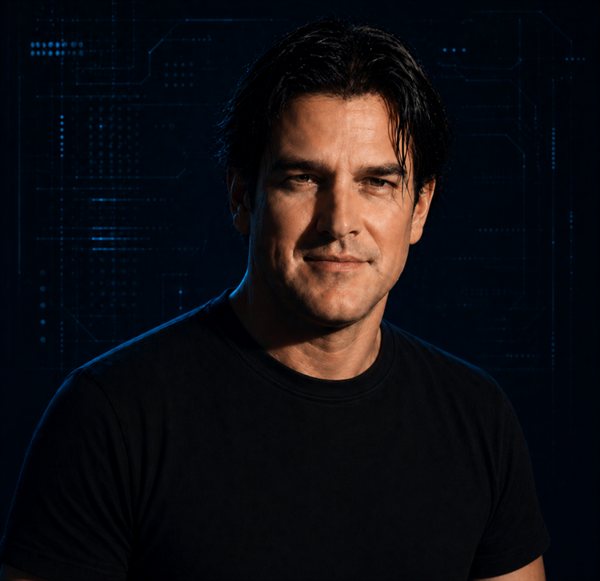
Philippe Laporte

Philippe Laporte

Founder and CEO

Founded and architects Cyberian Systems, and is the sole inventor of its verification methods (patents pending). Software engineering across virtual machines, compilers, runtimes and mobile platforms, in lead and staff roles, with more than a decade in Silicon Valley. BSc in Computer Science from McGill University; part-time Master of Engineering at Concordia University, Advanced Cryptography first among the graduate courses. Worked on open-source tooling for proof systems before building the re-check. Contributing a chapter to the forthcoming book Auditing Artificial Intelligence in Regulated Environments.

philippe@cyberiansystems.ai
Anna Stasiak

Anna Stasiak

Chief Operating Officer

Leads operations, go-to-market and partnerships. Master's in Finance and Banking from SGH Warsaw School of Economics; sixteen years in banking, including preparing and verifying European Investment Bank financing-line applications. First employee of Cyberian Systems.

anna@cyberiansystems.ai

Programs

  • Incubated at District 3, Concordia University
  • NVIDIA Inception Program member
  • Google for Startups Cloud Program member

Let us help

A free call to work out three things: which of your AI decisions a regulator, examiner, reviewer or court could ask you to prove; what evidence you have today and who can check it; and whether a receipt fits your workload, with your own model or from the catalog.

Pick a time (opens in a new tab)

Emailcontact@cyberiansystems.ai

Based inMontreal, Canada